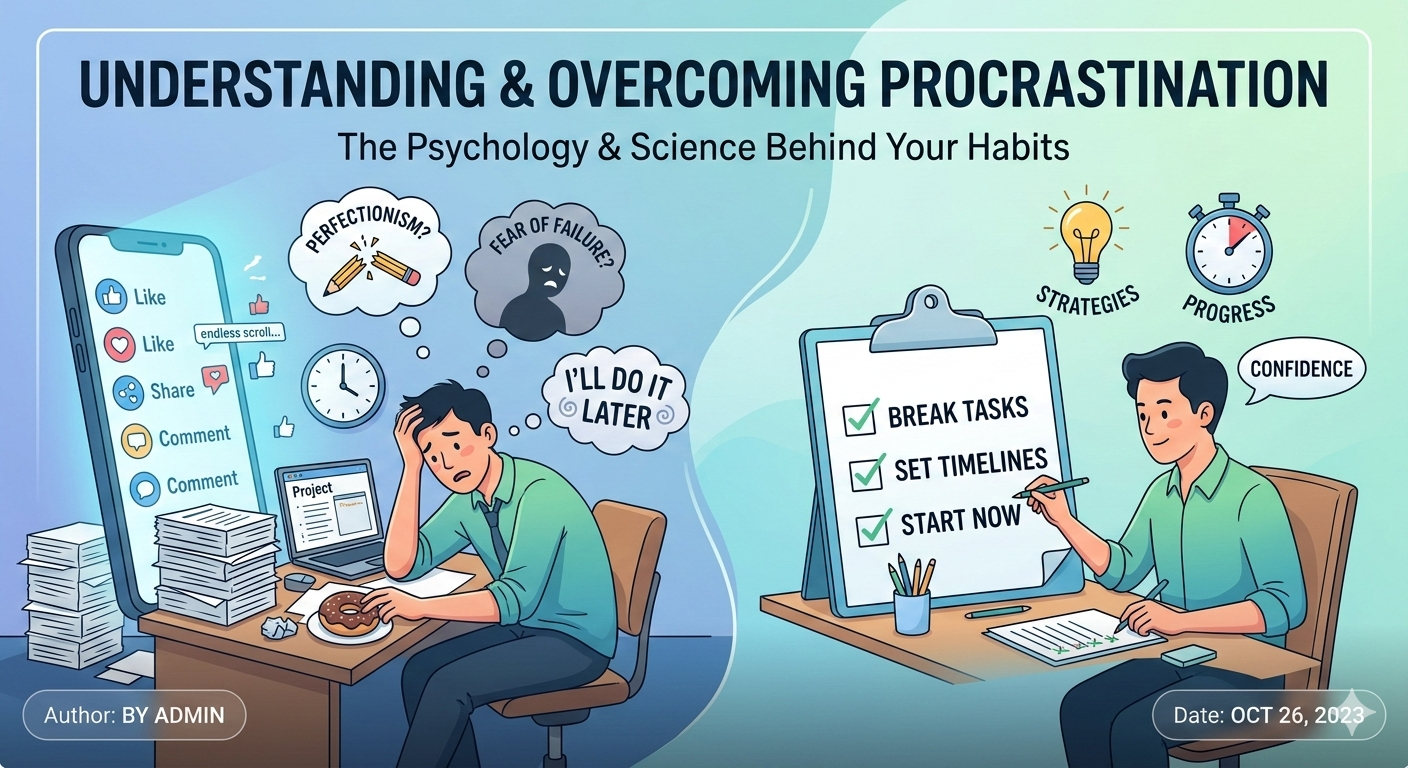
Psychology Behind Procrastination Habits
Mar 08, 2026 0 Views
Procrastination is something that almost everyone experiences at some point in life. Many people delay important tasks even when they know it may cause stress or problems later. It can happen when finishing a project, studying for exams, or completing daily work. When tasks are delayed again and again, it can slowly affect a person's productivity and peace of mind. Understanding the psychology behind procrastination habits can help people learn why they delay their work and how they can manage it better.
What Is Procrastination
Procrastination is the act of delaying or postponing tasks that should be completed. It is often mistaken for laziness, but psychologists explain that procrastination is usually connected to emotions and mental responses rather than a lack of ability or intelligence.
People procrastinate because their brain tries to avoid discomfort. When a task feels difficult, boring, or stressful, the mind naturally looks for something easier or more enjoyable to do. This temporary relief feels good at the moment, but the unfinished task still remains.
The Psychological Reasons Behind Procrastination
Several psychological factors explain why people develop procrastination habits.
Fear of Failure
One of the most common causes of procrastination is fear of failure. When people worry that they might not perform well, they sometimes avoid starting the task altogether. This avoidance protects their self confidence in the short term but creates bigger problems later.
Perfectionism
Perfectionism can also lead to procrastination. Some individuals delay tasks because they feel the outcome must be perfect. The pressure to achieve flawless results makes it harder to begin the work.
Low Motivation
Motivation plays a major role in productivity. When people do not feel emotionally connected to a task, they may delay it. The brain naturally prioritizes activities that bring instant satisfaction.
Poor Time Management
Another psychological factor is poor planning. When tasks feel overwhelming, people may not know where to start. Without clear structure or goals, the brain tends to delay action.
How Procrastination Affects Mental Well Being
Procrastination may seem harmless at first, but it can affect emotional health over time. Constant delays can increase stress, anxiety, and feelings of guilt. When unfinished tasks continue to pile up, they create mental pressure that can impact overall healthcare and personal wellbeing.
Mental health professionals often explain that chronic procrastination may lead to burnout and reduced self confidence. People begin to feel that they cannot control their responsibilities, which affects both personal and professional life.
The Role of Brain Chemistry
Research in psychology shows that procrastination is related to how the brain processes rewards. The brain tends to choose activities that give immediate pleasure instead of long term benefits. This is why people often choose entertainment, social media, or relaxation over difficult tasks.
The prefrontal cortex of the brain, which controls planning and decision making, competes with the emotional part of the brain that seeks comfort. When emotions dominate decisions, procrastination becomes more likely.
Ways to Overcome Procrastination
Although procrastination is common, it can be managed with practical strategies.
Break Tasks Into Smaller Steps
Large tasks often feel overwhelming. Dividing them into smaller steps makes the work feel more manageable and reduces mental resistance.
Set Clear Deadlines
Clear timelines help the brain stay focused. When goals are specific and realistic, it becomes easier to stay motivated.
Remove Distractions
Limiting distractions can improve focus. A quiet environment and organized workspace can help people stay committed to their tasks.
Practice Self Compassion
Many people become overly critical of themselves when they procrastinate. Practicing self understanding and focusing on gradual improvement can reduce stress and encourage progress.
Procrastination and Personal Growth
Understanding procrastination is an important step toward personal development. When individuals recognize the psychological reasons behind their behavior, they can make better decisions about how they manage time and emotions.
Improving productivity is not only about completing tasks. It is also about protecting mental health and maintaining a balanced lifestyle. Learning to manage procrastination can contribute to better healthcare, stronger focus, and improved confidence in daily life.
Conclusion
The psychology behind procrastination shows that delaying tasks is usually linked to emotions, fear, and thinking patterns, not just laziness. When people understand these reasons, they can build better work habits and lower their stress.
With a positive mindset and practical strategies, people can become more productive while also improving their mental wellbeing and overall healthcare. Simple changes in daily behavior, better planning, and knowing what emotions trigger delay can slowly help reduce procrastination.
Frequently Asked Questions (FAQs) Click here
1. Is procrastination always a bad thing?
Not necessarily. "Active procrastination" is a real phenomenon where individuals intentionally delay tasks because they find they work better under the intense pressure of a deadline. However, this only works if it doesn't cause you significant distress or lower the quality of your output.
2. How is procrastination different from ADHD?
While everyone procrastinates, people with ADHD often struggle with executive dysfunction, making it physically and mentally harder to initiate tasks, regulate focus, or track time. If procrastination is accompanied by chronic forgetfulness and impulsivity, it may be worth consulting a professional.
3. Why do I procrastinate even on things I enjoy?
This is often due to perfectionism. When you care deeply about a project, the pressure to make it "perfect" creates anxiety. Your brain views that anxiety as a threat and encourages you to avoid the task to keep you feeling "safe" and relaxed.
4. Can technology help me stop procrastinating?
Technology is a double-edged sword. While apps like "Forest" or "Freedom" can block distractions, the best "tool" is often low-tech: the 5-Minute Rule. Tell yourself you will work on a task for just five minutes. Once the "starting friction" is gone, the brain usually finds it easier to continue.
5. Does physical health affect procrastination?
Absolutely. Lack of sleep and poor nutrition deplete your glucose levels and willpower. When you are tired, your prefrontal cortex (the "logical" brain) weakens, making it much harder to resist the immediate gratification of scrolling through social media.